Showing posts with label Cameos from Zion. Show all posts

Sunday, September 17, 2017

Facebook Statistics and what they mean for you


A Long List of Facebook Statistics—And What They Mean For Your Business

Everyone’s got an opinion about Facebook. Some people think it’s a fun way to keep up with friends and family. Others believe so deeply in its lasting cultural relevance they permanently ink their bodies in honor of it. Some businesses continue to invest more time and money into Facebook, while some choose to focus on other social networks.
Opinions are one thing, but when you’re evaluating the usefulness of Facebook for your business what you really need is data. We’re talking cold, hard stats—and there’s A LOT out there. Luckily, we’ve done the work for you. This list covers everything from Facebook user statistics to demographics, usage trends, and advertising insights. Enjoy

Facebook user statistics
Facebook has more than a billion active users:
But it’s a small world after all:
Average friends per user:

What these stats mean for your business

I’m accustomed to only using the word “billion” to convey a type of kidding-not-kidding hyperbole (i.e. “I want to eat a billion pizzas for lunch”) but in Facebook’s case, there is no exaggeration. They have over a billion daily active users. If Facebook was a country, it would be the most populated country on earth. So even though the way in which businesses (and customers) use Facebook will continue to evolve, it’s safe to say that the platform as a whole isn’t going anywhere anytime soon. Investing in building and sustaining a presence on Facebook should (still) be a top priority for your business.

Facebook demographics

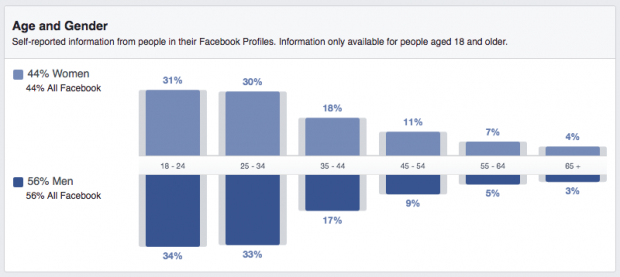
People of every age use Facebook:
The gender split is fairly even:

A Long List of Facebook Statistics—And What They Mean For Your Business | Hootsuite Blog
Image via Facebook.

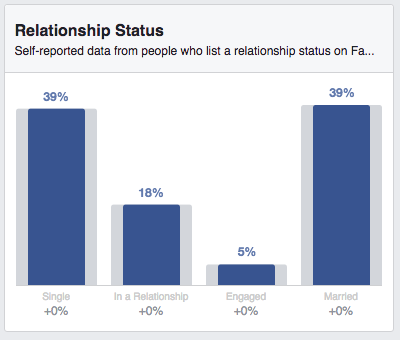
The split between single and married users is pretty even too:

A Long List of Facebook Statistics—And What They Mean For Your Business | Hootsuite Blog
Image via Facebook.

Education levels:
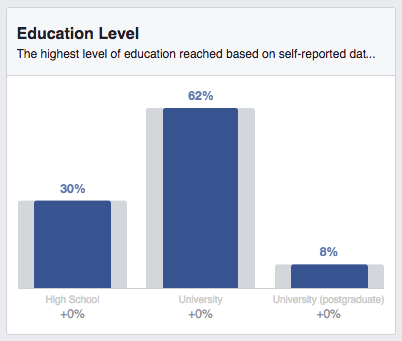
  • According to self-reported data, 62 percent of Facebook users have some form of university education, while 30 percent reported high school as being the highest level of education reached.
A Long List of Facebook Statistics—And What They Mean For Your Business | Hootsuite Blog
Image via Facebook.

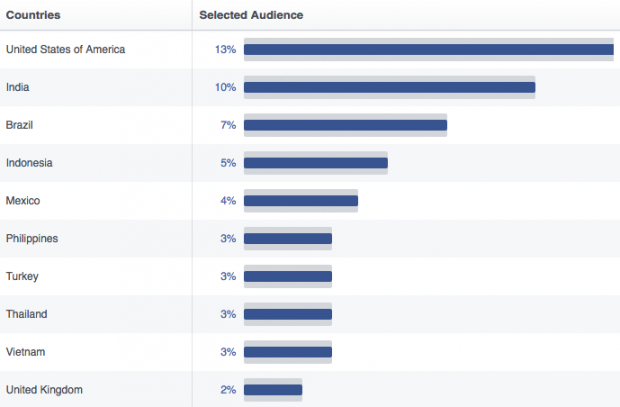
Facebook is massive outside North America:

A Long List of Facebook Statistics—And What They Mean For Your Business | Hootsuite Blog
Image via Facebook.

What these stats mean for your business

The phrase “know your audience” is integral to many things, including successful public speaking, non-catastrophic stand-up comedy, persuasive sales pitches, and effective social media marketing.
It’s important to continually analyze the demographics of Facebook users overall in comparison to your target audience. If you’ve built a community on the platform already, start digging into your Page Insights on a regular basis to get a better idea of who your Facebook audience is and what motivates them to engage with you.

Facebook usage statistics

Facebook is still dominating:
Video is a big, big deal:
Facebook Live is continuing to grow:
Facebook is a news source:
  • 66 percent of Facebook users consume news on the platform.
  • 88 percent of millennials get news from Facebook.
New parents are power users:
The lifespan of a Facebook post:
The best time to post on Facebook:

What these stats mean for your business

While there’s no magic formula for guaranteed success on Facebook (bummer), paying attention to the ever-changing trends in how people are using it can ensure your business is taking full advantage of it.
Always stay focused on what your audience uses Facebook for—whether it’s getting news updates or posting photos of their newborn—because it may not align with what you assume it should be used for. Staying in tune with these behaviors will help you create social marketing campaigns that are more effective and widely embraced by your audience on Facebook.

Brands and business on Facebook

What these stats mean for your business

Facebook presents a huge opportunity to provide fast, direct, and personal customer service. People will continue to expect faster and faster responses to their comments, which means any unanswered questions or complaints left on your Facebook Page can turn into ticking time bombs for your brand.

Facebook Ads statistics

Effectiveness of Facebook Ads:

What these stats mean for your business

Choose your visuals wisely. They play a huge role in the success of Facebook Ads, so don’t skimp out on your photography or design budget. It’s also important to tailor your ads (and your posts in general) to user behavior on Facebook. If most users watch content on Facebook without the sound on, don’t use voiceovers to convey the most important messages in your video ads


Friday, November 11, 2016

Guide To Tracking Social Media In Google Analytics


Imagen de Blue Fountain Media bajo licencia CC BY 2.0

Your website is the cornerstone of your business’ online presence. Alongside your website is its helpful sister, social media. Your social media and website presence should be integrated with one another in order to continuously drive traffic to your online assets. And with social media driving traffic to your site, the next step is measuring your efforts so you can improve. As always, this is where Google Analytics comes handy.

Google Analytics provides you with data to see where your website visitors come from and understand your visitors’ behavior on your site. Additionally, when you setup your Google Analytics account to track and measure your social media initiatives, you’ll then be able to adequately prove the ROI of social media for your business.

To get you started, we’ve put together this guide to tracking social media in Google Analytics in 6 easy steps.
Step 1: Create social media objectives and goals for your website

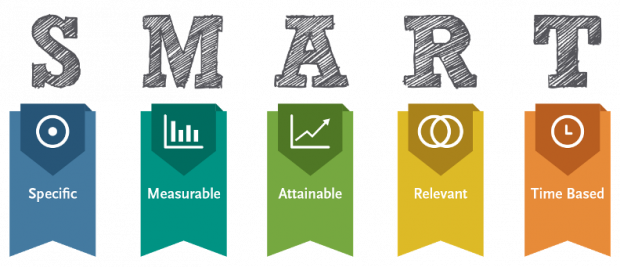
Before you can begin tracking your social media initiatives in Google Analytics you need to create social media objectives and goals. These objectives and goals should be part of your overall social media marketing plan and should be aligned with your broader marketing and business strategy. If your objective is to use social media to increase website traffic, then create S.M.A.R.T. goals that will help you achieve that objective.


For example: To increase website traffic by 15% in Q2, 100 Tweets a month will be dedicated to driving traffic to the website.
Step 2: Sign up for Google Analytics

This step is extremely important if you want to track social media in Google Analytics. It’s important that you have a Google Analytics account to access your website traffic reports. Create a new Google Analytics account, if you don’t have one. Visit google.com/analytics, click Sign in to Google Analytics or Create an account button on the top right hand corner, and follow the on-screen instructions.


Step 3: Setup your Google Analytics tracking code

In order to gather website data from Google Analytics you need to first setup your tracking code. There are two ways to collect page tracking data: Google Tag Manageror by adding the tracking code directly to your site.

1) Google Tag Manager

This approach is recommended because using Google Tag Manager simplifies tag management on your site. It makes it easier to add other tags, such as AdWords Conversion Tracking and remarketing tags, to your site and configure Google Analytics tracking. Follow the steps in the video below to setup Google Tag Manager.


2) Adding the tracking code directly to your site

In order to do this you first must have access to your website’s source code and be comfortable editing HTML.

To set up the web tracking code:
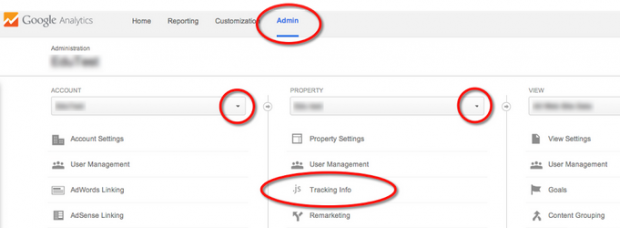
Sign in to your Google Analytics account, select the Admin tab. From the Account and property columns, select the property you’re working with. Click Tracking Info > Tracking code.


Copy the snippet. It starts with <script> and ends with </script>. Make sure to not reuse the same tracking code snippet on multiple domains.
Paste your snippet into every webpage you want to track, and paste it before the closing </head> tag.
Check your setup to make sure the code shown in Google Analytics is the same that is on your website’s source code.
Step 4: Setup Google Analytics Goals

Tracking the true effectiveness of social media for your business goes beyond pageviews and visits. Finding out if social media actually helps your business is more important if you’re trying to prove the ROI of social media. Knowing important metrics like: product sign ups, leads, downloads, and newsletter signups, will help you solidify the importance of social media for your business.

To create Goals follow these steps by Google Analytics.
Step 5: Understanding Social Analytics Reports

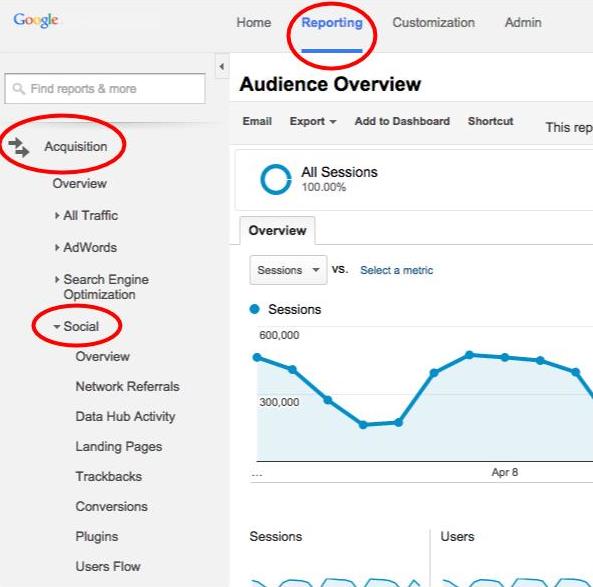
There are 8 Social Analytics reports available in Google Analytics. These reports will help you understand the impact and effectiveness of your social media initiatives. You can find these reports under the Reporting tab > Acquisition > Social.


1) Overview report

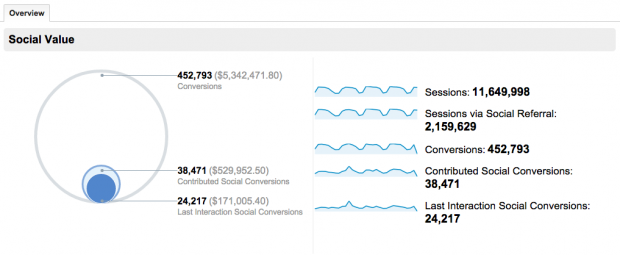
This report allows you to see a glance into how much conversion value is generated from social channels. The social value graph compares the number and monetary value of all goal completions versus those that are from social referrals.


2) Network referrals

This report will provide you with engagement metrics for traffic from each social network. It will show you which social networks referred the highest quality traffic.

3) Data Hub Activity

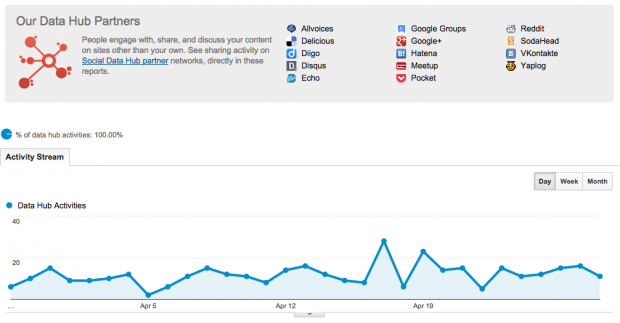
The Data Hub Activity report shows you how people are talking about and engaging with your site content on social networks. You’ll be able to see the most recent URLs people shared, how they shared it, and what they said.


4) Landing pages

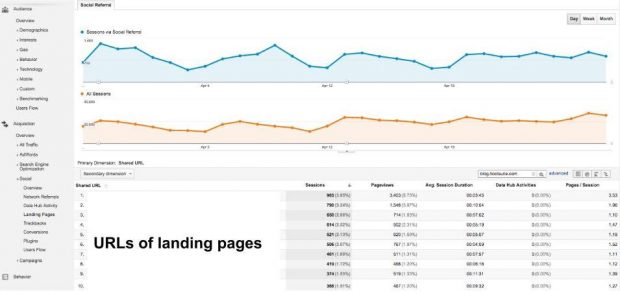
This report allows you to see engagement metrics for each URL. Each URL will show you the originating social networks for that URL.


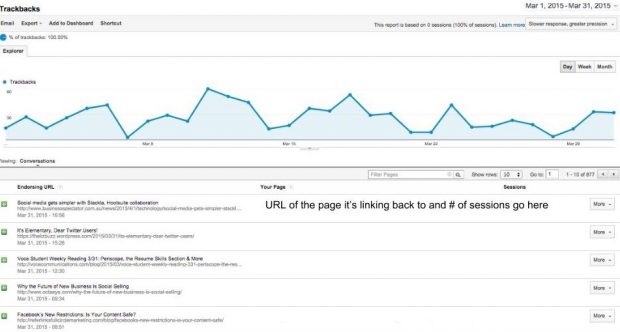
5) Trackbacks

In this report you’ll be able to know which sites are linking to your content, and in which context. You can use this data to replicate successful content and build relationships with those who frequently link to your site.


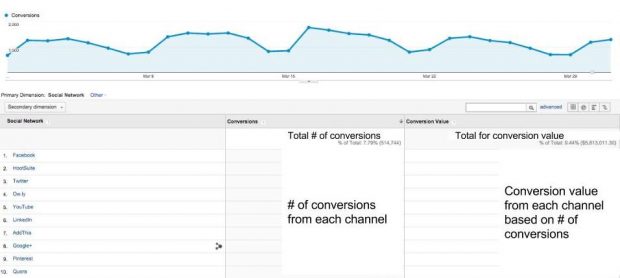
6) Conversions

This report is the report where you can really quantify the value of social media for your business. The Conversions report will show the total number of conversions and the monetary value of conversions that occurred as a result of referrals from each network. Note: Step 4 must be completed in order for this report to be populated with data.


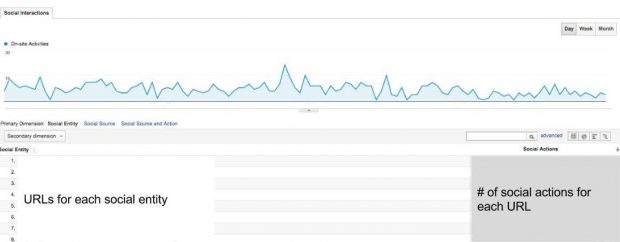
7) Plugins

If you have social share buttons on your site it’s important to understand which buttons are being clicked on and for which content. This report provides you with the data necessary to know which articles are most commonly shared, and from which social networks they’re being shared on.


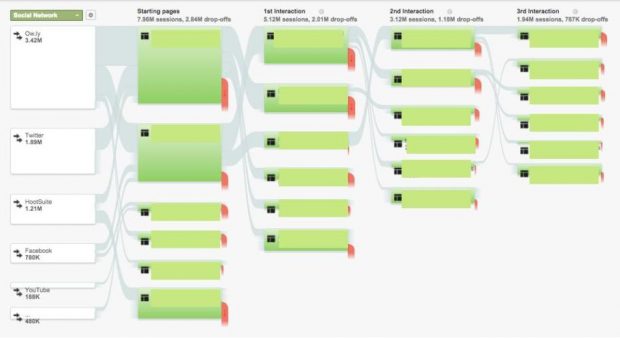
8) Users flow

The Users Flow reports shows the initial paths that users from social networks took through your site. If you run campaigns that promote specific products, you can see whether users from each social network entered your site through a product page and whether or not they continued to other parts of your website.


Step 6: Reporting on the data from these reports

Now that you have the data that you need to showcase how your social media initiatives is driving traffic to your website; compile the necessary data and present it to your boss in either a PowerPoint or Google Presentation. Make sure to only include the data that aligns back to the goals you initially created in Step 1. Your presentation should include graphs and 2-3 sentences explaining what each graph means to your business.

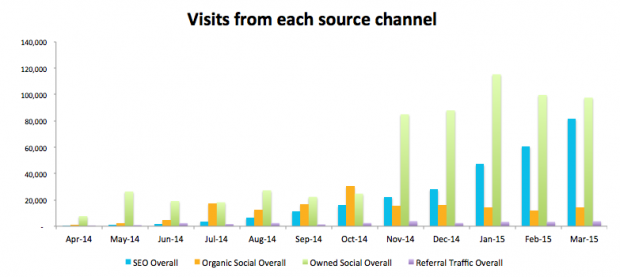
For example, if you want to show how social media is doing in driving traffic to your website you can create a graph that compares it to other source channels, like the graph below, then talk about how owned and organic social channels are driving the most traffic to your website.


We hope this 6 step guide to tracking social media in Google Analytics helps gets you started on the right track to proving social media ROI. Just remember to always be: tracking, measuring, analyzing, and improving, in order to constantly improve your business’s online assets.

Thursday, November 3, 2016

Useful and Free Windows 10 Applications

Image result for Free Windows 10 Applications


Windows 10 is bundled with useful applications and utilities that many users are not aware of. Below are 10 useful applications that you can launch from the Windows main menu.

To launch an application, click the Windows Key / Logo (located on both sides of the spacebar near the Alt key) and start typing the application name.
When the application name appears, click on its icon.

If you would like to create a shortcut on your desktop for future access, click on the icon and hold the click, and drag the icon with your mouse to your desktop.


Sticky Notes


Sticky Notes allows you to make notes using Post-it note-like windows on your desktop. It is a very simple program. You can type text, change colors of the note, add a new note and delete the note. Until you delete the note (trash can on right corner of note), it will remain on your desktop / taskbar including the next time you restart your computer.


Notepad

Notepad is a basic text editor that you can use to create simple documents. The most common use for Notepad is to view or edit text (.txt) files. Because Notepad supports only very basic formatting, you cannot accidentally save special formatting in documents that need to remain pure text.
I personally use notepad to prepare short texts that I copy and paste into social network postings and comments. You can also create useful lists, save them and then create a convenient shortcut on your desktop to access them.


Wordpad

WordPad allows you to create more complex documents, giving you most of the capability of a word processor. You can change the font for the entire document or just a word within it. With the click of a button, you can insert bullets into text or align a paragraph to the right or left. All of this formatting is saved with your document, so no matter who opens it, it will appear as you created it.
Wordpad can open plain text files (.txt), Word (.doc, .docx), Office Open (.xml) and Rich Text Format (.rtf) documents. If you need to create short documents and you do not need the functionality of a full word processor (like Micosoft Word or DavkaWriter) Wordpad will do the job. Wordpad launches much faster and is easier to use than Word.
If you need to send a formatted document to other users (including non-Windows users), I recommend that you save the document as a Rich Text File (choose the .rtf save as option). If you pasted images into your document, save them as RTF files.


Character Map

Character Map is a utility to view the characters in any installed font, and to copy characters to the clipboard in lieu of typing them. After you copy the character to the clipboard, you can paste them (ctrl + V) into Wordpad or any wordprocessor. The program is very useful for reviewing all the unique characters in the Wingding fonts (Wingdings, Wingdings 2, Wingdings 3).


MS PAINT

Microsoft Paint is a graphics program that enables you to create and edit picture files. Paint creates files using the Bitmap format, which uses the BMP file extension. This format uses a range of colors and bits. In contrast, draw programs use vector graphics (object-oriented images), which scale better. MS Paint can also open and save files in the GIF, TIFF and JPEG formats. The various drawing tools in the program include: the paint bucket, pencil, spray can, eraser, line and curved line tools, multiple shape tools, text tool, cutout tool. Many digital artists or editors prefer programs like Photoshop, but many on a tighter budget or with less time on their hands, use Paint. I use Paint for creating drawings, flyers, and for adding text, lines and shapes to my photos. There are many free Youtube tutorials to learn about the many features of MS Paint


Snipping Tool

Snipping Tool is a screenshot utility. It can take screenshots of an open window, rectangular areas, a free-form area, or the entire screen. There is a "delay" function, which allows for timed capture of screenshots. The Snipping Tool editor allows you to edit and annotate the screenshot. You can draw on the image using the "Pen" or "highlighter" tools (including different colors). The images can be saved as PNG, GIF, JPG or MHT files. You can select and copy the image to the Windows clipboard (ctrl + C) and paste it (ctrl + V) into your Word processor and even the free Wordpad program listed above.


Calculator

Calculator is a simple yet powerful calculator that includes standard, scientific, and programmer modes, as well as a unit converter. You can add up a bill, convert measurements in a recipe, complete complex math, algebra, or geometry problems. There is a history function that makes it easy to confirm if you've entered all you numbers correctly.


Alarms and Clock

The alarm program is similar to alarm/time applications on your smart phone. In addition to alarms, the application has a world clock, timer and stopwatch functions.


Calendar

The Windows 10 calendar application can connect to Outlook.com calendars and Exchange calendars, Google and Apple iCloud calendars. There are day, work week, week, month, and today views for viewing your events. It also works with live tiles, giving you a quick view of your upcoming events. You can also use the calendar independently and you do not need a Microsoft account (even if you are prompted for one). The application lets you switch to alternate calendars including Lunar and Hebrew options. To access these two options, click on the calendar settings, enable alternate calendars, and choose Hebrew Lunar and/or Hebrew text.


Microsoft Solitaire Collection

With Windows 10, the Microsoft Solitaire Collection is now installed by default. It is free but with ads. There is a fee if you want to remove the ads. The card games are nice but I prefer online word games like Mattel Scrabble and Lexulous.
If you play Lexulous via Facebook and your stats are close to mine, I am always open to a good game.

Tuesday, November 1, 2016

Say Think You Can’t Write: Writing Resources for Non-Writers


Can you draw? When asked this question, most people scoff and answer a definitive “no.” However, take a pencil, connect it to paper, and leave a mark. You have drawn. Writing is a skill much like drawing in this sense. Many believe that they simply cannot write, or that they aren’t a “writer,” when the truth is that they really just believe they are not a good writer.

For content marketers, writing is obviously an integral component to most, if not all, aspects of the job. Everything from drafting blog posts to crafting the perfect video script requires the ability to write. While of course the act of stringing words together to form sentences can satisfy the basic requirements, writing is a skill that with time, dedication, and a desire to improve, can be mastered to an exceptional level. Just like the perfect set of graphite pencils helps with  drawing, there are numerous tools available to help you improve your chances of writing success. The following resources will help those of you who don’t consider yourselves writers (yet!) create enviable content that just begs to be shared.

Book it

An integral part of the writing process is inspiration, and the top source of inspiration for any writer is reading. As Stephen King said, “If you want to be a writer, you must do two things above all others: read a lot and write a lot.” Just as you schedule yourself time for other career development and education purposes, make room in your calendar for the time to read. As content strategist Mike Hanski shares in his Huffington Post article,reading can help you become a better writer. When you read you:
  • Find inspiration
  • Gain new knowledge
  • Learn your genre better
  • Expand your vocabulary for your own works
  • Understand language better
  • Learn from real gurus of writing
  • Reveal the secrets of this job in practice
Two books that I have personally found not only to help the technical aspects of my writing, but which have breathed new life into my passion for the craft, are:

Everybody Writes

If you are in content marketing, Ann Handley’s Everybody Writes is a must-read. With every sentence in this writing guide worthy of repetition and consideration, Handley provides a thorough and approachable guide that proves that yes, everybody can write. She nails it on the head for content marketers who insist they can’t write with thefollowing passage:
“Good writing can be learned—the way trigonometry or algebra or balancing a balance sheet is a skill most of us can master. In an essay at the Neiman Journalism Lab, ‘How I Faced My Fears and Learned to Be Good at Math,’ Matt Waite writes: ‘The difference between good at math and bad at math is hard work. It’s trying. It’s trying hard. It’s trying harder than you’ve ever tried before. That’s it.’”

Bird by Bird

Whether writing a blog post on social media strategy, or the great american novel, Anne Lamott’s Bird by Bird provides a narrative on the writing process from beginning to end. One of the biggest assets of any content marketer is creativity, and Lamott offers insight into ways anybody, natural born writer or not, can foster this into their writing.Lamott declares that “writing is nothing more nor less than a sensemaking mechanism for life,” which most likely relates to the core principles of your content marketing strategy. You aim for clear, easily digestible, but memorable writing, and Bird by Birdwill help guide you along this path.

Blog busters

It’s safe to say that one of the key parts of your content marketing strategy is most likely a blog. As Social Media Examiner declares, “Blogs are your home base; they are the center of your content marketing system. Whether you’re a small business or a Fortune 100 company, blogs should be at the heart of your content marketing because blogsfuel social media, search optimization, and the sales process.”
However, blogging obviously requires a certain level of writing prowess, so if you consider yourself a non-writer you might feel like you need some help in creating quality content. Thankfully, the following resources are available to guide you through the blog writing process painlessly.

Portent’s Content Idea Generator

The first step in writing a blog post is, of course, coming up with a topic to write about. While reading, brainstorms, and other organization’s content can act as great inspiration for your ideas, if you feel that your genius well has temporarily dried up, Portent’s Content Idea Generator can be a saviour. Simply enter the subject you want to write about (such as “social media”) and click the arrow submit button. This will generate ideas for blog topics, and even if none of the suggestions are exactly what you are looking for, they will offer a solid jumping off point for your writing.

Copyblogger

Called “the bible of content marketing” by VentureBeat, Copyblogger is a high-quality site that all content marketers should have bookmarked. The Copyblogger blog provides advice and guidance from top experts in the field of content marketing, which has helped them gain the title as “the most popular content marketing and writing blog on the planet.” The editors lay it out by sharing what their readers can expect from Copyblogger by understanding that:
  • It’s not (just) about SEO.
  • It’s not (just) about social media.
  • It’s not (just) about blogging or email marketing or conversion.
“Today, it’s always a bigger picture. You need to understand all the facets of effective content marketing, and we cover the gamut, daily… for free.”
Some of our favourite posts from Copyblogger, which will help non-writers master the craft, include:

Content Marketing Institute

The Content Marketing Institute is a comprehensive resource for all social media specialists and content marketers. The site offers tons of resources such as: career advice, research areas, event listings, training resources, a magazine, podcast, and consulting services. Looking under the “content creation” tag, you’ll find numerous articles and posts from content marketing experts offering guides on writing and general content creation. Here are a few of our favorite posts from this section of the site, but you’ll easily find countless other resources by exploring the site yourself:

Crew

Crew matches creatives, designers, and developers with high quality companies that require their services. As a destination for so many within the realm of content marketing, the Crew blog offers a wealth of information for such professionals. The post that solidified Crew’s position on this list is one of their most famous, entitled Write ugly: How to write 20 posts in 2 days.
This post is especially groundbreaking for those who don’t consider themselves writers, as it emphasizes the practice of writing fast, and with mistakes. Author Jory Mackay focuses on the free-writing approach as a way for writers and “non-writers” to crack through whatever is holding them back from getting words down on paper. As Mackay explains, the key principles here are:
  • Just start working (and don’t stop)
  • Set out a block of time to work
  • Write how you think
  • Follow your thoughts
In addition to this key post, Crew has a number of posts in their repertoire that will undoubtedly contribute to your writing success:

Hemingway App

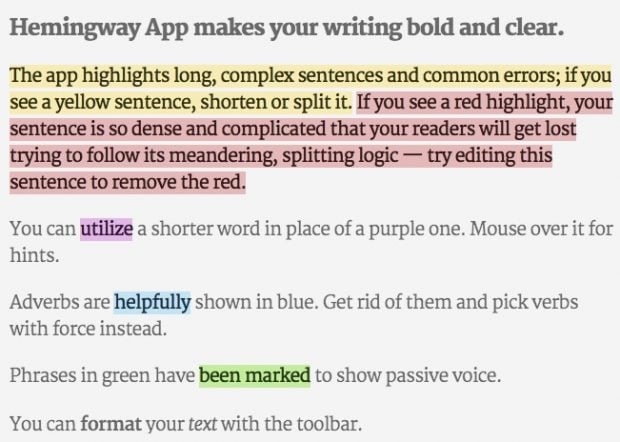
Hemingway App is one that I’ve discussed before, but which deserves another mention. This free tool allows you to copy and paste in a block of text, which will be evaluated in its readability. As explained on the site, “Hemingway makes your writing bold and clear.It’s like a spellchecker, but for style. It makes sure that your reader will focus on your message, not your prose.” As all content marketers definitely aim for the focus to be on the message rather than the construction of said message, the Hemingway App is an invaluable tool.
Hemingway App

CoSchedule’s Headline Analyzer

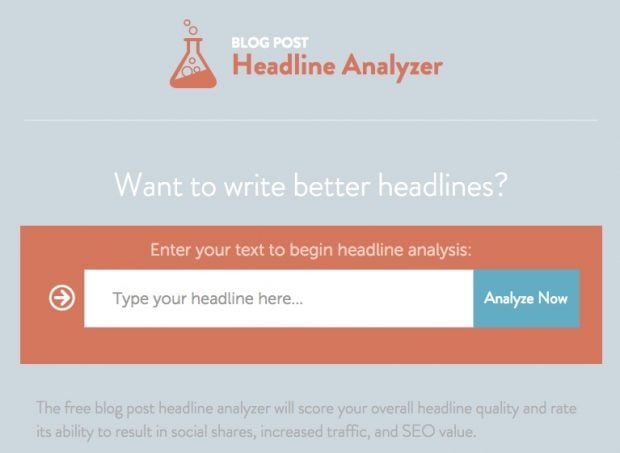
One of the most significant components of any piece of writing is the title or headline. Unfortunately, it can also one of the most difficult parts of the writing process. While eight out of 10 people will read a headline, only two out of those 10 will continue reading the actual article. Due to this, you want to ensure your headline is working for you, rather than against you, and CoSchedule’s Headline Analyzer can help you do just that. To find out if your headline makes the cut, you just need to enter it in the submission box and the Headline Analyzer will give you a score based on quality, SEO, social shareability, and increased traffic potential.
Headline Writing
Now that you have all of these resources at your fingertips, it’s time to confidently put these fingers to keyboard and write on!